A CEO steps on stage, the holding slide disappears, the walk-on music lands at precisely the right moment and every person in the room can see, hear and follow the message. That outcome is not achieved by hiring a screen and a microphone. Corporate event AV production is the detailed work behind a confident live experience – translating a business brief into sound, light, content, staging and technical delivery that supports every guest, speaker and commercial objective.
For an internal conference, a client launch or a leadership meeting, Effective production makes every important moment feel effortless. It also needs to protect against the things audiences never want to notice: an unreadable presentation, an overrun agenda, a remote speaker with poor audio, or a venue system that cannot meet the brief. The right approach combines creative judgement with disciplined planning. At the event book we work with trusted Av and production partners, one of those partners is Acorn AV, with whom we have worked with for many years to deliver events all over the glove Ed and his expert team really help elevate your event.
Start with the audience, not the equipment
It is tempting to begin with a kit list. LED wall, comfort monitors, lectern microphone, moving lights. Those decisions matter, but they follow the more useful questions: what must the audience understand, feel or do differently after this event? Who is in the room, who is joining remotely, and what does each group need to experience?
A senior leadership audience may need a restrained stage environment that prioritises clear financial messaging. A sales kick-off often benefits from higher energy, bold visuals, and engaging breakout sessions. Product launches, by contrast, require carefully planned lighting, sightlines, and reveal sequences that build anticipation.
Starting with the audience also helps avoid unnecessary spending. A larger screen is not always the best solution. In bright venues, LED displays may perform better, while projection often works well in smaller spaces. Production choices should always reflect the venue, agenda, and guest experience.
What corporate event AV production should cover
Good production is a connected service, not a collection of separate suppliers. It brings together the technical detail, creative direction and on-site control required to make the agenda work.
Sound that allows every message to land
Audio is often the least glamorous production element and the one people notice fastest when it fails. The system needs to suit the room shape, ceiling height, audience size and ambient noise, whether that is a hotel ballroom, a warehouse venue or a conference space with challenging acoustics.
This includes choosing the right microphones for each speaker format, managing playback for videos and walk-on music, mixing panel discussions, and providing confidence foldback where speakers need it. For hybrid events, it also means planning audio specifically for remote attendees. Sound that works in the room does not necessarily translate well to a livestream.
Screens, content and sightlines
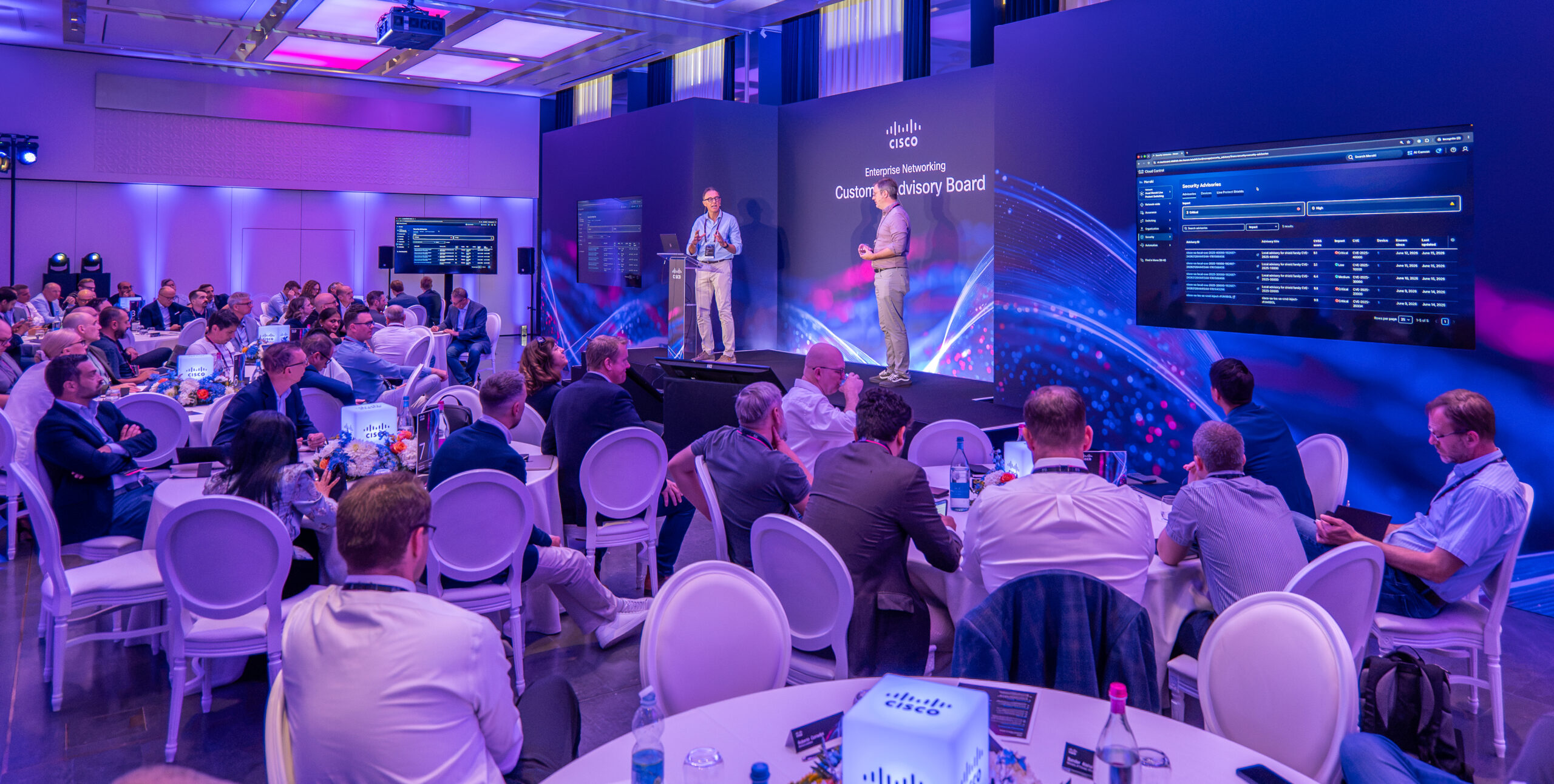
Visual production begins with what guests need to see from every seat. That means considering screen size and position, presentation format, camera feeds, captions, branding and the placement of speakers on stage. A technically impressive screen is of little use if a delegate at the side of the room cannot read the data being presented.
Content and production teams should work together early. Slide templates, video resolutions, font sizes and aspect ratios all affect how material performs on the day. Last-minute presentation changes are a reality of corporate events, so a clear version-control process and a dedicated show caller can make the difference between a calm update and an avoidable interruption.
Lighting, staging and room transformation
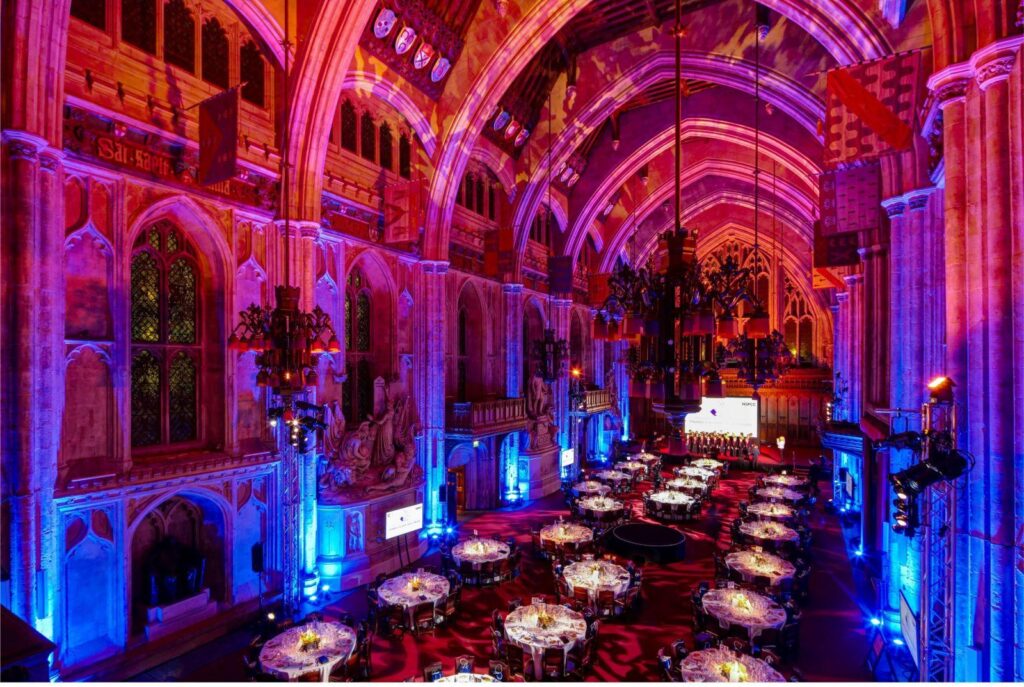
Lighting does more than make a stage visible. It directs attention, creates atmosphere, supports cameras and gives a corporate setting a purposeful visual identity. A considered lighting plan can turn an ordinary conference room into a branded plenary, make an awards moment feel special, or shift the mood between daytime content and an evening celebration.
Staging should be equally intentional. Stage height, access steps, lectern placement, furniture and branding all affect speaker confidence and audience connection. Accessibility needs to be part of the conversation from the outset, including step-free stage access, captioning, hearing support and layouts that work for all delegates.
Video, streaming and remote contribution
Hybrid delivery can extend an event’s reach, but only when it is designed as an experience in its own right. Remote audiences need a clear reason to stay engaged, not simply a distant view of a room. Camera positions, presentation feeds, online moderation, interaction tools and session pacing should all be planned around their needs.
There is a trade-off. A simple broadcast of a short town hall may be entirely appropriate. A global conference with remote panels, audience Q&A and multiple time zones requires more rehearsal, staffing and contingency planning. Being clear about the intended digital experience helps avoid a costly set-up that does not match the programme.
The planning that protects the live day
The strongest production is usually won before guests arrive. A site visit reveals details that an online floorplan cannot: loading access, lift dimensions, rigging points, power supply, Wi-Fi performance, daylight, room acoustics and the route equipment must travel through the building. These factors determine the event timeline, crew requirements and what can safely be delivered.
A production schedule then turns the creative idea into a workable plan. It should cover load-in, set build, content deadlines, sound checks, speaker rehearsals, technical rehearsals, doors open, show timings and derig. It should also identify who has authority to approve changes when the pressure is on.
For complex programmes, a show flow is essential. This is the detailed running order used by the production team, covering every cue: entrance music, video playback, lighting states, speaker introductions, holding slides, walk-on routes and changeovers. It gives everyone a shared reference point and allows the event to feel composed even when the agenda is busy.
Contingency planning is another sign of professional care. That may include backup playback, spare microphones, duplicate presentation files, alternative internet connections and a clear plan for a delayed speaker or changed agenda. Not every risk needs an expensive solution, but every material risk should have an owner and a response.
Make the production team part of the event team
The most effective corporate events happen when AV, venue, catering, registration, content and client stakeholders are working from one joined-up plan. If registration is running late, the production team may need to hold doors and adjust the opening sequence. If catering needs extra turnaround time, lighting and music can help sustain the room’s energy. If a speaker is delayed, the show caller needs an agreed route through the agenda.
This is why supplier coordination matters as much as equipment choice. A senior production lead should be comfortable challenging a plan constructively, flagging risks early and finding practical alternatives. They should also be calm enough to manage the inevitable last-minute change without making it the client’s problem.
At The Event Book, we see production as part of the wider guest journey. The technical plan sits alongside venue logistics, registration, speaker management, branding and hospitality, so the details support one clear event experience rather than competing priorities.
Questions worth asking before you appoint a partner
Before committing to a corporate event AV production supplier, ask how they approach the brief, not only what equipment they can provide. Can they explain why their proposed format suits your audience and venue? Will they complete a site visit and produce a detailed schedule? Who will be your on-site lead, and how will they manage speakers, content changes and rehearsals?
It is also sensible to establish what is included. Clarify crew hours, travel, delivery, rigging, power distribution, content management, rehearsal time, streaming platform costs and overtime. Transparent scope protects the budget and avoids discovering essential requirements after the design has been approved.
Finally, look for a team that listens. A production partner should bring ideas and technical expertise, but they must understand your brand, internal sensitivities and measures of success. A polished show is valuable; a polished show that helps colleagues make decisions, clients feel valued or teams feel connected is the point.
The best event production does not compete for attention. It gives the right people the confidence to take the stage, gives every guest a clear view of what matters, and leaves your team free to be present in the room.
FAQs
What is corporate event AV production?
Corporate event AV production is the planning and management of audio, video, lighting, staging, presentation technology, and technical support needed to deliver a successful business event. It ensures speakers, presentations, and audience experiences run smoothly from start to finish.
Why is professional AV production important for corporate events?
Professional AV production helps prevent technical issues, improves audience engagement, ensures clear communication, supports hybrid attendees, and creates a polished experience that reflects your company’s brand and objectives.
What services are included in corporate event AV production?
Most corporate AV production services include:
- Audio systems
- LED screens or projection
- Stage lighting
- Video production
- Live streaming
- Presentation management
- Technical rehearsals
- Show calling
- On-site technical support
How far in advance should AV production be planned?
For conferences, product launches, and large corporate events, AV production should ideally begin 6–12 weeks before the event. Larger international events may require several months of planning, especially if custom staging, hybrid technology, or multiple venues are involved.
Can AV production support hybrid and virtual corporate events?
Yes. Professional AV teams can provide livestreaming, multiple camera angles, remote speaker integration, audience interaction tools, recording, and technical support to deliver a seamless experience for both in-person and online attendees.
How do I choose the right corporate event AV production partner?
Look for a partner with experience delivering corporate events, a strong planning process, transparent pricing, site visit capability, experienced technical staff, contingency planning, and a portfolio of successful conferences, product launches, and business events.