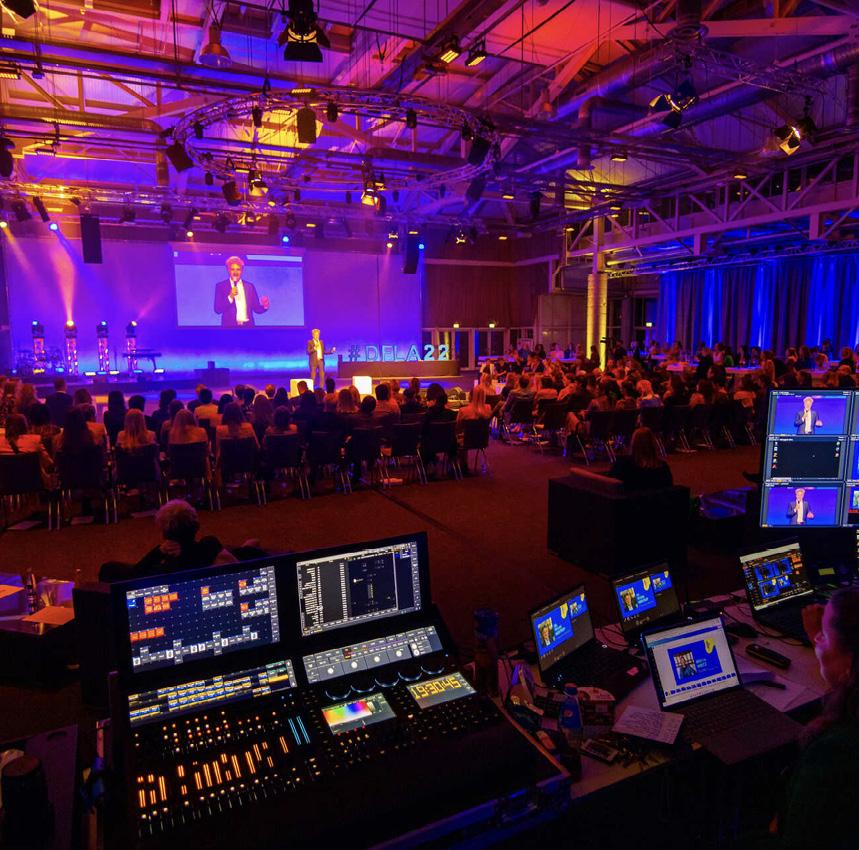
A chief executive can deliver a compelling keynote to a full London conference room, only for remote colleagues to receive a patchy stream, unclear slides and no meaningful way to contribute. That is not a technology failure alone. It is an event design failure. The right hybrid event technology solutions give every attendee a clear role in the experience, wherever they are joining from.
For corporate teams, hybrid events remain useful where audiences are spread across offices, where senior speakers cannot all travel, or where widening access matters more than putting every delegate in one room. But they demand more planning than simply adding a camera to a live event. The room, platform, production team, registration journey and content plan all need to work towards the same objectives.
Start with the audience, not the platform
The first question is not which streaming platform to use. It is what each group of delegates needs to take away. A leadership conference may need a secure broadcast, high-quality speaker feeds and structured questions from regional teams. A product launch may need audience polling, moderated chat and on-demand content that teams can share with clients after the live moment. A training programme may need smaller breakout rooms, downloadable resources and evidence of completion.
These requirements affect the technology choice, but they also affect the run of show. A remote attendee cannot browse sponsor stands during a coffee break or pick up context from conversations in the foyer. They need purposeful moments of participation, clear signposting and content that the production team designs for online viewing.
It also helps to be realistic about the audience split. A 90 per cent in-room conference with a small remote group requires a different approach from an event where hundreds of colleagues join from multiple countries. The former may benefit from a polished webcast and a dedicated online moderator. The latter may need a more structured digital environment, regional viewing hubs and a production plan built around time zones.
What effective hybrid event technology solutions include
Technology should support the event rather than become its main attraction. The best set-up is usually a connected group of tools, managed by people who understand the pressure points of a live corporate event.
A reliable broadcast and production set-up
A professional hybrid broadcast starts with sound. Remote audiences will forgive a slightly imperfect camera angle more readily than they will tolerate muffled speech, feedback or a noisy room. Dedicated microphones, sound mixing, appropriate lighting and cameras positioned for both speakers and audience reactions all make a material difference.
For larger events, a vision mixer allows producers to switch between presenter shots, panel views, slides, pre-recorded films and audience questions. This keeps the online experience active and gives remote delegates the same context as those in the room. A backup internet connection and locally recorded content are sensible safeguards, particularly where an executive announcement or client-facing broadcast is involved.
There is a trade-off here. A multi-camera production brings a premium feel, but not every internal meeting needs it. A well-lit single-camera set-up with excellent audio and firm moderation can support a short company update effectively. The production level should reflect the importance, audience size and expected shelf life of the content.
Registration that understands how people are attending
Registration is where useful event data begins. Delegates should be able to choose whether they will attend in person or online, state dietary or accessibility requirements where appropriate, and receive communications relevant to their route.
This matters operationally. The venue team needs accurate numbers for catering, security and room capacity, while the online production team needs to know expected log-ins, territories and access requirements. It also prevents an all-too-common problem: sending remote colleagues messages about cloakrooms and travel, while in-person guests receive links and joining instructions they do not need.
A clear registration journey can also support attendance. Calendar invitations, reminder emails and a concise joining guide give people confidence that participating will be straightforward. For senior or external audiences, branded communications and a well-managed helpdesk reinforce the professionalism of the event before it begins.
Interaction designed for both sides of the screen
The biggest risk in hybrid is creating two separate events: a live experience in the room and a passive broadcast for everyone else. The production team should plan interaction so both audiences can contribute without one group waiting while the other takes over.
A moderator can curate questions from the room and the online chat, bringing in remote voices at regular intervals. Polls the production team can display on the main screen and shared through the event platform, giving speakers a live picture of sentiment. For workshops, digital whiteboards, facilitated breakout sessions and smaller hosted discussions can create more meaningful participation than an open chat feed.
Not every feature the production team should enable. Too many channels can distract delegates and make moderation difficult. Choose the interaction methods that serve the agenda, explain how they will be used, and assign named people to manage them.
Build the event around a single production plan
Hybrid events often involve more stakeholders than a comparable live event. There may be an internal communications lead, a venue manager, an AV supplier, a streaming provider, presenters, a moderator, IT security colleagues and regional hosts. Without a single production plan, details can fall between teams.
The plan should cover the delegate journey from registration to follow-up, as well as the technical journey from rehearsal to recording. It should identify who owns speaker briefings, slide formatting, platform access, captioning, polling, question moderation and contingency decisions. It should also include clear timings for speaker arrivals, technical checks and content handovers.
Rehearsals are particularly valuable when presenters are joining remotely. They are not simply a chance to test a laptop. They allow the producer to check framing, lighting, audio delay, slide control and the speaker’s confidence with the format. A presenter who knows where to look, when to pause for a poll and how questions will reach them will appear more natural to every audience.
For complex programmes, a show caller or experienced event producer should hold the central running order and make decisions in real time. If a panel overruns, a video fails to play or a virtual speaker loses connection, someone needs the authority and experience to protect the delegate experience without creating confusion.
Make inclusion and accessibility part of the brief
Hybrid formats can broaden access, but only when they are designed with inclusion in mind. Live captions can support colleagues with hearing loss, people watching in busy environments and delegates whose first language differs from the presenter. Accessible slide design, readable fonts and verbal descriptions of key visuals make content easier to follow for everyone.
Consider time zones too. A global audience may need more than one live session, a regional host, or on-demand access with an opportunity to submit questions afterwards. Releasing a recording is helpful, but it is not always an equivalent experience. If dialogue and decision-making are central to the event, build routes for each region to contribute.
Security deserves equal attention. Corporate events can include sensitive commercial updates, leadership discussions or personal data. Platform permissions, access controls, recording policies and data handling stakeholders should agree early, particularly where external guests or international audiences are involved.
Measure more than viewing figures
A log-in total is useful, but it does not tell the full story. Compare registrations with attendance, session drop-off points, poll responses, questions submitted and on-demand views. These signals show where the content held attention and where the format may need refining.
Qualitative feedback matters as well. Ask whether remote delegates felt able to participate, whether joining instructions were clear and whether the session justified the time away from their day. For a sales or marketing event, look at follow-up meetings, content downloads or qualified leads. For an internal conference, measure understanding, confidence and actions taken after the event.
The most valuable reporting connects the event back to its original purpose. If the aim was to align teams around a new strategy, the technology has done its job only when delegates can access, understand and act on that strategy.
Choose a partner who can manage the full picture
Hybrid delivery works best when event strategy and technical production are planned together. A supplier can provide a platform or cameras, but someone still needs to shape the delegate journey, coordinate the venue, brief speakers, manage registrations and keep the programme moving on the day.
The Event Book approaches this as an extension of your team, bringing together event design, venue and supplier coordination, delegate communications and on-site production support. Your event brief is in safe hands when every moving part has an owner and every audience has been considered from the outset.
The best hybrid event does not make remote attendees feel as though they were unable to come. It gives them a reason to feel that the event was made with them in mind.
FAQs
What are hybrid event technology solutions?
Hybrid event technology solutions combine live event production with digital platforms to deliver a seamless experience for both in-person and remote attendees. They typically include streaming technology, AV production, registration systems, audience interaction tools, and event analytics.
Why are hybrid event technology solutions important?
Hybrid event technology solutions improve accessibility, extend audience reach, support remote participation, and help businesses deliver engaging corporate events without compromising the experience for either in-person or virtual attendees.
What technology is needed for a successful hybrid event?
A successful hybrid event typically requires professional audio and video equipment, reliable internet connectivity, a secure streaming platform, audience engagement tools, event registration software, and experienced technical support.
How can businesses improve engagement during hybrid events?
Businesses can improve engagement by using live polls, moderated Q&A sessions, breakout rooms, digital whiteboards, chat moderation, and interactive content that involves both in-person and remote participants equally.
How do you choose the right hybrid event technology partner?
Choose a provider with experience delivering corporate hybrid events, strong technical expertise, reliable production support, secure event platforms, contingency planning, and the ability to manage both live and virtual audiences.
What should businesses measure after a hybrid event?
Businesses should evaluate attendance rates, audience engagement, poll participation, session watch time, on-demand views, feedback, lead generation, and overall event objectives to measure the success of a hybrid event.