
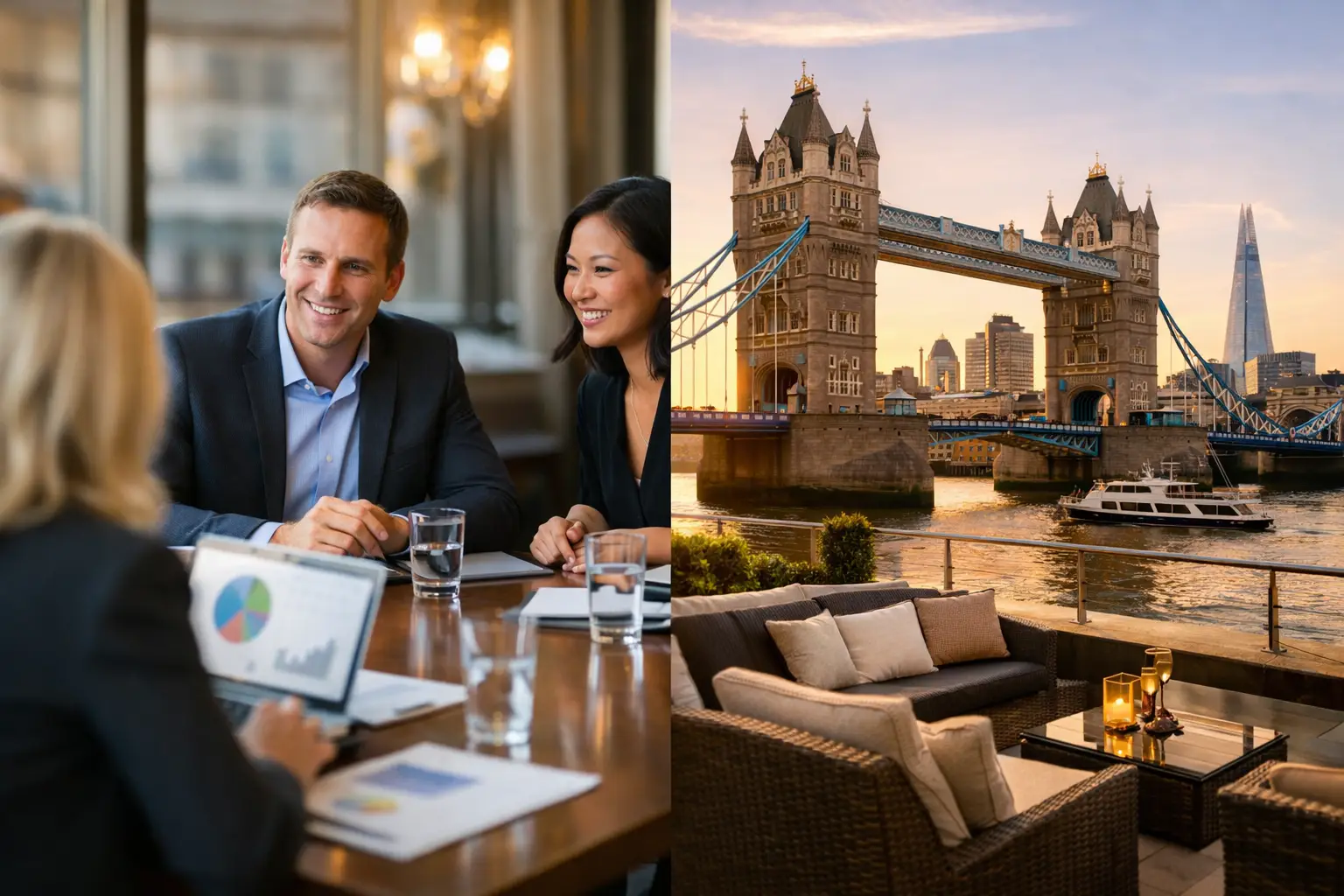
A successful incentive trip should feel effortless to the people who earn it. Behind that feeling sits a detailed plan: flight arrivals that work for different markets, a hotel that suits the group’s pace, memorable experiences with credible back-up plans, and a programme that recognises achievement without becoming overly formal. This incentive trip planning case study uses an anonymised corporate brief to show how those decisions come together.
The group was not looking for a standard reward break. Its leadership team wanted to thank high-performing employees and key partners, build stronger relationships across offices, and create a sense of occasion that participants would talk about long after they returned home. The challenge was to meet those aims for a mixed international group while keeping the experience polished, personal and properly managed.
The brief: reward people without over-programming them
Our illustrative client was a global professional services business bringing 85 guests to London for three nights. Attendees were travelling from the UK, Europe and North America, with a broad age range and a mixture of long-serving top performers, newer colleagues and invited partners.
The brief called for a premium London experience rather than a packed sightseeing schedule. Guests needed enough structure to feel looked after, but also genuine free time. The programme had to include a welcome event, a choice of daytime experiences, a gala dinner and straightforward transport throughout. Dietary requirements, accessibility needs and varying arrival times also needed careful attention.
This is where incentive planning differs from arranging a group holiday. The destination is only one part of the proposition. Every touchpoint must reinforce why guests were selected and make them feel valued, while still working commercially and operationally for the business funding the trip.
Incentive trip planning case study: turning objectives into a programme
The first decision was not the restaurant, hotel or activity. It was agreeing what success would look like. For this group, the measures were strong attendance, positive post-event feedback, meaningful cross-office interaction and a programme that felt distinctly London without relying on obvious tourist clichés.
With those outcomes agreed, the programme was built around three principles: choice, ease and moments of genuine surprise.
Choosing a hotel that did more than provide bedrooms
A Central London hotel was selected for its private event space, quality of bedrooms, dependable service and practical access to arrivals, restaurants and evening venues. A cheaper property further out might have reduced the room rate, but would have added travel time at the start and end of every activity. For an incentive group with limited time together, that is often a false economy.
The hotel also became a useful operational base. A private hospitality desk offered a visible point of contact, while a dedicated room for luggage, late arrivals and last-minute queries kept the main guest areas calm. Branded welcome packs were placed in rooms, containing a concise itinerary, transport details, local recommendations and a contact number for the event team.
Building choice into the daytime experience
One-size-fits-all activities can make an incentive programme feel like a compulsory away day. Instead, guests selected from three hosted experiences in advance: a private cultural visit before public opening, a food-focused neighbourhood tour, or a more active river and city experience.
Each option was designed to appeal to a different preference while maintaining a comparable level of quality. The selection process also gathered dietary, mobility and accessibility information early, rather than leaving it to be resolved on the day. That reduced awkward conversations for guests and gave suppliers time to make proper arrangements.
Choice does create more administration. It requires clear communications, firm response dates and a realistic plan for people who miss the deadline. However, for a group of this size, it made the programme feel more considered and helped avoid the familiar problem of a third of the room being disengaged before lunch.
Creating an arrival night with purpose
The opening evening was intentionally relaxed. After long-haul and European arrivals, a formal dinner would have asked too much of guests who were tired or working across time zones. A private reception with substantial food stations, live acoustic music and short welcome remarks allowed people to arrive at their own pace.
The senior host kept the speech brief and specific, recognising the achievement that had earned each person’s place. There was no lengthy presentation and no attempt to force networking. The setting did the work, giving colleagues who rarely meet in person an easy way to reconnect.
The gala dinner: one high-impact shared moment
The final night needed to provide the programme’s biggest collective moment. A distinctive exclusive-use venue was chosen for its sense of arrival, flexible production options and separate spaces for reception, dining and after-dinner entertainment.
The format moved guests through the evening rather than keeping them at one table for hours. A drinks reception included subtle interactive entertainment, followed by a seated dinner with considered table plans. After dessert, the room changed for a live band and dancing. This transition matters. It gives the evening energy without making the event feel over-produced.
Production was deliberately elegant rather than heavy-handed. Warm lighting, discreet branding and a simple stage treatment supported the client’s identity while allowing the venue’s character to remain visible. A gala dinner is not improved by placing a logo on every available surface. Guests remember atmosphere, service, food and the people around them.
Managing the less glamorous details
The smoothest incentive programmes are often those with the strongest contingency planning. In this case, that included monitoring flights, holding flexible transport capacity for delayed arrivals, confirming restaurant timings against local traffic patterns and keeping wet-weather alternatives ready for outdoor elements of the programme.
Transport was scheduled with realistic loading times, not just journey times shown on a map. Hosts travelled with each group, drivers had final itineraries and guest lists, and a central event lead maintained contact with every supplier. These details are particularly valuable when a group is split across several activities.
We also recommend agreeing decision-making authority before travel begins. If a flight is delayed or weather affects an experience, the on-site team needs to know who can approve a change and what budget flexibility is available. Waiting for approval while guests stand in a hotel lobby is avoidable.
What made the programme successful
The positive outcome was not down to one dramatic activity or expensive venue. It came from the programme being aligned with the audience. Guests had time to enjoy London, choices that reflected their interests and clear information at every stage. The client’s leaders had opportunities to thank people properly, without turning the trip into a conference in disguise.
There were trade-offs. Central accommodation and exclusive-use space carried a higher cost, while offering activity choices increased administration and supplier coordination. Yet both choices protected the guest experience and reduced the risk of friction during the trip. If the group had been smaller, or the budget tighter, a single hosted experience and a hotel outside the very centre may have been the sensible alternative.
The key lesson is that an incentive trip should be planned around the emotional return as well as the itinerary. People need to feel recognised, comfortable and included. When those elements are right, the destination becomes more than a backdrop to a reward.
Questions to ask before planning an incentive trip
Before approaching destinations or venues, establish who the trip is for, what behaviour or performance it is recognising, and how the business will measure its value. Be clear about whether partners are included, how much free time guests should have and whether the objective is celebration, relationship building, team connection or a combination of all three.
It is equally useful to set a realistic per-person budget that covers more than flights and bedrooms. Airport handling, transfers, hosted experiences, staffing, production, gratuities, contingency and guest communications all need an allowance. A clear budget early on gives planners room to prioritise the elements guests will notice most.
For international groups coming to London, an experienced local partner can make the difference between a good itinerary and a confidently delivered one. The Event Book can provide complimentary venue sourcing or manage the full programme, from hotels, restaurants and experiences to transport, guest management and gala dinners. One experienced point of contact, one contract and one invoice keeps a complex brief manageable.
If you are shaping an incentive programme, call us on 020 7523 5046 or email your event brief to events@theevemtbook.uk. We aim to respond within two hours, Monday to Friday, 9am to 6pm.
The most memorable reward is rarely the busiest one. It is the trip where every guest feels that the experience was planned with them in mind.
FAQs
What is an incentive trip planning case study?
An incentive trip planning case study shows how an organisation turns business objectives into a structured reward experience, covering destination selection, accommodation, activities, transport, guest management, entertainment and contingency planning.
How do you plan a successful incentive trip?
Start by defining the purpose of the trip, the target guests, budget and desired outcomes. Then select suitable accommodation, experiences and venues while allowing enough free time, clear communication and reliable transport.
What makes an incentive trip different from a group holiday?
An incentive trip is designed to recognise achievement and support specific business objectives. The experience needs to feel rewarding and personalised while also meeting corporate requirements for budget, logistics, accessibility, guest management and duty of care.
How can choice improve an incentive trip experience?
Offering guests a choice of activities can make the programme feel more personal and inclusive. Different experiences can accommodate varying interests, activity levels and accessibility requirements while maintaining a consistent standard of quality.
Why is contingency planning important for incentive trips?
Flights, weather, traffic and supplier issues can affect an incentive programme. Backup activities, flexible transport, spare time and clear decision-making authority allow the event team to respond quickly without significantly disrupting the guest experience.
Can an event agency manage a complete incentive trip?
Yes. An experienced event agency can coordinate hotels, venues, restaurants, activities, transportation, guest management, entertainment, production and on-site delivery, giving the client a single point of contact throughout the programme.

