A room can look impressive in photographs and still be wrong for the event. A theatre built for 400 delegates may struggle to accommodate even a modest exhibition, while a large exhibition hall can feel sparse and impersonal for a leadership conference. Understanding the difference between a conference venue versus exhibition venue helps you select a space that supports how people will move, meet, learn and do business.
For corporate planners, the question is rarely as simple as choosing one or the other. Many events need both: a focused conference environment for content, plus a practical exhibition area where sponsors, partners or internal teams can make connections. The right answer depends on the programme, audience, budget and operational detail behind the brief.
What makes a conference venue different?
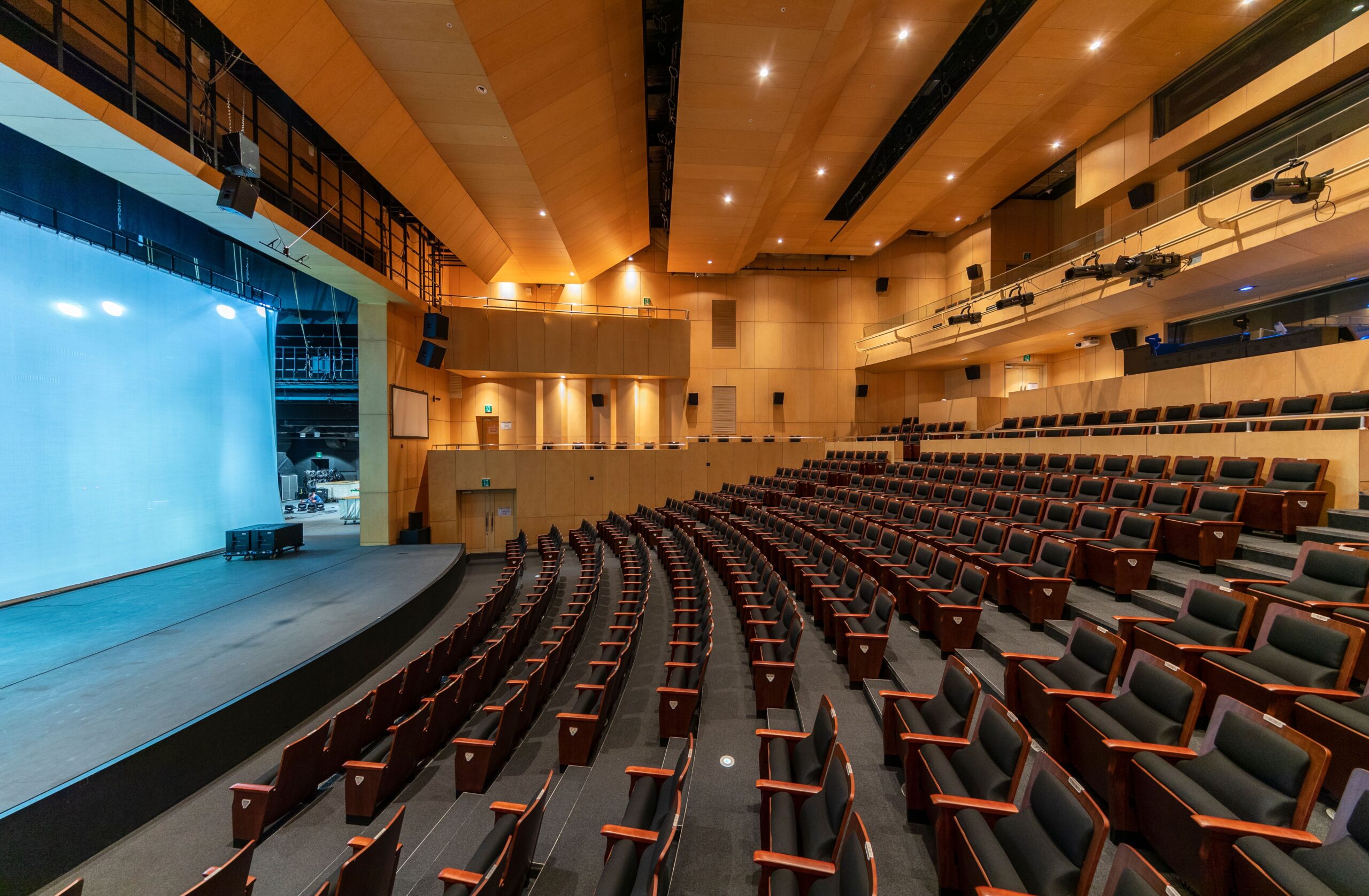
A conference venue is designed primarily around communication. Its strongest features tend to be plenary rooms, breakout spaces, reliable AV infrastructure, delegate registration areas and catering that can be delivered to a timetable. Whether you are planning a board-level summit for 50 or an annual conference for 800, sightlines, acoustics and the audience experience are central.
The main room often uses theatre, cabaret or classroom seating. Delegates need a clear view of the stage and screens, enough space to work comfortably, and audio they can hear from every seat. Good conference venues also make the transitions between sessions feel easy: registration in the right place, coffee close to the meeting rooms, sensible cloakroom capacity and breakout rooms that do not require a ten-minute walk through public corridors.
For a conference, the venue’s technical provision deserves close attention. Included screens and projectors are not always sufficient for a presentation-led programme, hybrid contribution, filmed content or a branded stage set. Ask about room height, black-out capability, control positions, internet capacity, power, loading access and restrictions on external production suppliers before assuming a package covers everything.
Location matters too. A Central London conference venue near major rail stations may be worth a higher room hire if it improves attendance and reduces late arrivals. For residential conferences outside London, bedroom numbers, meeting-room proximity and evening dining options often carry greater weight.
What makes an exhibition venue different?
An exhibition venue is built around floor space, circulation and access. The priority is not simply fitting stands into a hall. Visitors need to enter easily, navigate naturally and have enough room to stop and talk without blocking aisles. Exhibitors need an efficient route for deliveries, build and breakdown.
Exhibition spaces commonly offer high ceilings, wide doors, goods lifts, loading bays and substantial power provision. These details are crucial if exhibitors are bringing vehicles, large product displays, heavy equipment or custom-built stands. Floor loading limits, rigging points and fire regulations can quickly determine whether a venue is viable.
A venue with an attractive open hall may still be unsuitable if its loading bay has limited time slots, vehicles cannot wait onsite, or a stand contractor must carry equipment a long distance from the service entrance. Similarly, venue internet suitable for everyday guests may not support exhibitor lead-capture systems, demonstrations or a busy event app.
Exhibition budgets should allow for more than room hire. Stand build, shell scheme or space-only requirements, electrics, furniture, carpet, signage, cleaning, security, exhibitor catering and traffic management can each affect the final cost. An experienced venue team will explain what is included, what must be ordered separately and where the operational risks sit.
Conference venue versus exhibition venue: the practical comparison
The clearest distinction is what the space needs to achieve. A conference venue helps an audience concentrate on a shared programme. An exhibition venue helps visitors discover, browse and interact with multiple exhibitors or displays.
That distinction affects the layout. Conference plans focus on seating capacity, stage position, screen visibility and breakout allocation. Exhibition plans focus on net usable space, stand footprints, aisle widths, visitor flow, service routes and compliance. A room’s headline capacity is therefore only a starting point.
For example, a 500-capacity theatre may work well for a keynote but leave little room for a 20-stand showcase. A 1,000-square-metre exhibition hall may house that showcase comfortably, but require careful design, lighting and furniture to create a welcoming conference setting. The format shapes the venue, not the other way round.
Costs also work differently. Conference packages are often priced per delegate and may include room hire, refreshments, lunch and basic AV. Exhibition venues may quote hall hire first, with technical services and exhibitor requirements charged separately. Neither approach is automatically better value. It depends on what you need and how much control you require over the final experience.
When one venue needs to do both
Many corporate events combine a morning conference with an exhibition, sponsor marketplace or product demonstration area. This can work extremely well when the spaces are adjacent and delegates naturally pass through the exhibition during registration, coffee breaks, lunch and networking drinks.
The challenge is avoiding a layout where exhibitors are hidden in a separate room or delegates have to choose between attending content and meeting suppliers. Timing matters as much as floor plan. Build in meaningful breaks, give exhibitors enough dwell time and avoid placing the exhibition in a space needed for a rapid room turnaround.
For larger events, a dedicated exhibition venue with conference suites may be the best option. For smaller conferences, a hotel, museum or contemporary event space can offer a polished plenary room and a reception area that converts into an exhibition zone. There is no universal threshold, although stand size, exhibitor numbers, production scale and expected visitor flow will quickly point towards one type of venue.
Questions to settle before you start sourcing
A complete brief leads to a better shortlist and fewer surprises later. Start with guest numbers, including exhibitors, speakers, crew and staff rather than delegates alone. Be clear about whether numbers are guaranteed or still estimated, as this affects the capacity you need.
Then consider the event journey. Will everyone arrive at once? Is registration required? Do you need a plenary, breakouts, private meeting rooms, a catering area and an exhibition in separate zones? Are exhibitors building the day before, and do they need vehicle access? A simple agenda is often the fastest way to reveal the true venue requirement.
It is also useful to establish your commercial priorities. Is a fixed per-person conference package easier for internal approval? Do you need a venue that permits preferred caterers or specialist production? Are you working to a strict budget, or is location and delegate experience the greater priority? A good venue recommendation should explain these trade-offs rather than present a long, unfiltered list.
Save time with experienced venue sourcing
Contacting dozens of venues individually is rarely the best use of an organiser’s time, particularly when availability changes quickly and venue proposals are difficult to compare. The Event Book provides free venue finding across London, the UK and internationally, from private dining for 25 guests to large conferences and exhibitions.
Every enquiry is handled by a real person: an experienced event professional who will understand the brief, ask useful questions and contact suitable venues on your behalf. With more than 20 years of venue-finding experience and direct relationships with London and international venues, we can explain the practical differences between options, check availability and gather indicative costs.
Once we receive a complete brief, we aim to provide a focused shortlist of preferred venues, availability and indicative costs within two working hours. The exact timing depends on the complexity of the enquiry and how quickly venues respond. Our knowledge and relationships can also support rate discussions, though the best choice is not always the venue with the lowest initial price.
You can use our complimentary venue-finding service on its own, or ask us to manage the full event, including catering, production, branding, guest management and onsite delivery. Either way, your event brief is in safe hands.
Send us your complete brief and we aim to provide a shortlist of preferred options, availability and indicative costs. Speak to a real person. Call us on 020 7523 5046 or email your event brief to events@theeventbook.uk. We respond within 2 hours, Monday to Friday, 9am-6pm.
FAQs
What is the difference between a conference venue and an exhibition venue?
Conference venues typically prioritise presentations, speakers, seating and meeting spaces. Exhibition venues focus more on display areas, exhibitor stands, visitor circulation and product demonstrations.
Can an exhibition venue host a conference?
Yes. Some exhibition venues have conference halls, meeting rooms and presentation facilities. Check capacity, acoustics, AV and the layout needed for your programme.
Can a conference venue accommodate an exhibition?
Some conference venues can host exhibition stands alongside presentations and networking. The available floor space, access routes and exhibitor requirements will determine suitability.
What facilities should a conference venue provide?
Consider suitable seating, staging, screens, sound, microphones, reliable internet, breakout rooms, catering, accessibility and registration space.
What should I look for in an exhibition venue?
Check usable floor space, ceiling height, loading access, power supply, visitor flow, stand layouts, storage, catering and exhibitor facilities.
How do I choose between a conference venue and an exhibition venue?
Start with your event objectives, delegate numbers and programme. Choose a venue that supports the main activities, technical requirements, visitor experience and budget.