A conference can have an excellent agenda, a strong guest list and a well-known speaker, yet still feel disjointed if the room layout, sound, lighting and timings are wrong. That is where the distinction between event production versus event planning becomes useful. The two disciplines overlap, but they solve different problems – and understanding the difference helps corporate teams appoint the right support, set a realistic budget and protect the guest experience.
For many events, the first practical decision is not production at all. It is finding a venue that works for the format, numbers, location, budget and operational requirements. A poor venue choice can create expensive production workarounds later, while the right one makes everything easier.
What is event planning?
Event planning is the strategic and organisational side of an event. It begins with the purpose: what should the event achieve, who needs to attend and what should guests take away from it? From there, the planner develops the event structure and manages the many decisions required to bring it together.
For a corporate conference, that may include setting the programme, sourcing a suitable London venue, managing delegates, arranging catering, coordinating speakers, booking accommodation and building a detailed running order. For a gala dinner or office Christmas party, the focus may move towards guest numbers, menu choices, table plans, entertainment, transport and the overall atmosphere.
A good event planner also keeps a close eye on budget, contracts and deadlines. They are looking at the entire guest journey, from the first invitation to the final departure. Their job is not simply to create a checklist. It is to make sure each decision supports the event objective and that the moving parts work together.
Venue finding is often the first planning priority
Venue sourcing sits naturally within event planning because the venue affects almost every subsequent decision. Capacity on paper is only one consideration. A space that holds 300 guests for a standing drinks reception may not work for 300 people at cabaret tables with a stage, screens and camera positions.
Accessibility, loading access, ceiling height, built-in AV, catering restrictions, breakout rooms, nearby transport and curfews all matter. So does the less obvious question: will the venue feel right for your audience and brand?
The Event Book provides free venue finding across London, the UK and internationally. Our experienced team handles briefs ranging from private dining for 25 guests to major conferences and exhibitions. Rather than contacting dozens of venues yourself, you can ask one event professional to check availability, gather indicative costs and present a focused shortlist that fits the brief.
Our venue-finding service is completely free to clients. Once we receive a complete brief, we aim to provide preferred options, availability and indicative costs within two working hours. The exact timing depends on venue responses and the complexity of the enquiry, particularly for larger events, international programmes or requests with specialist production requirements.
What is event production?
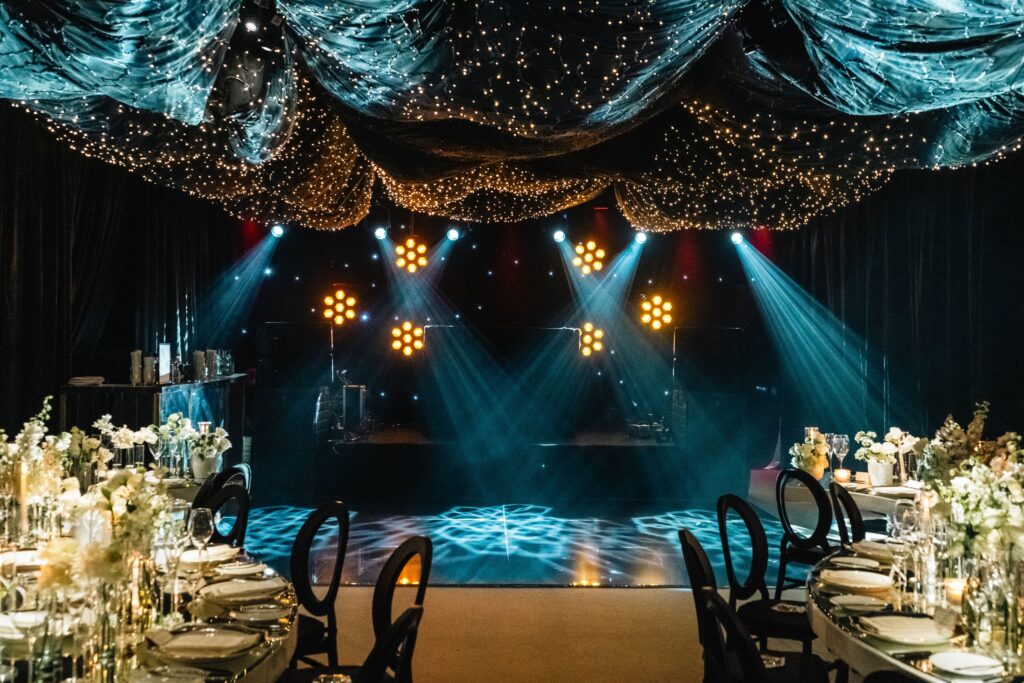
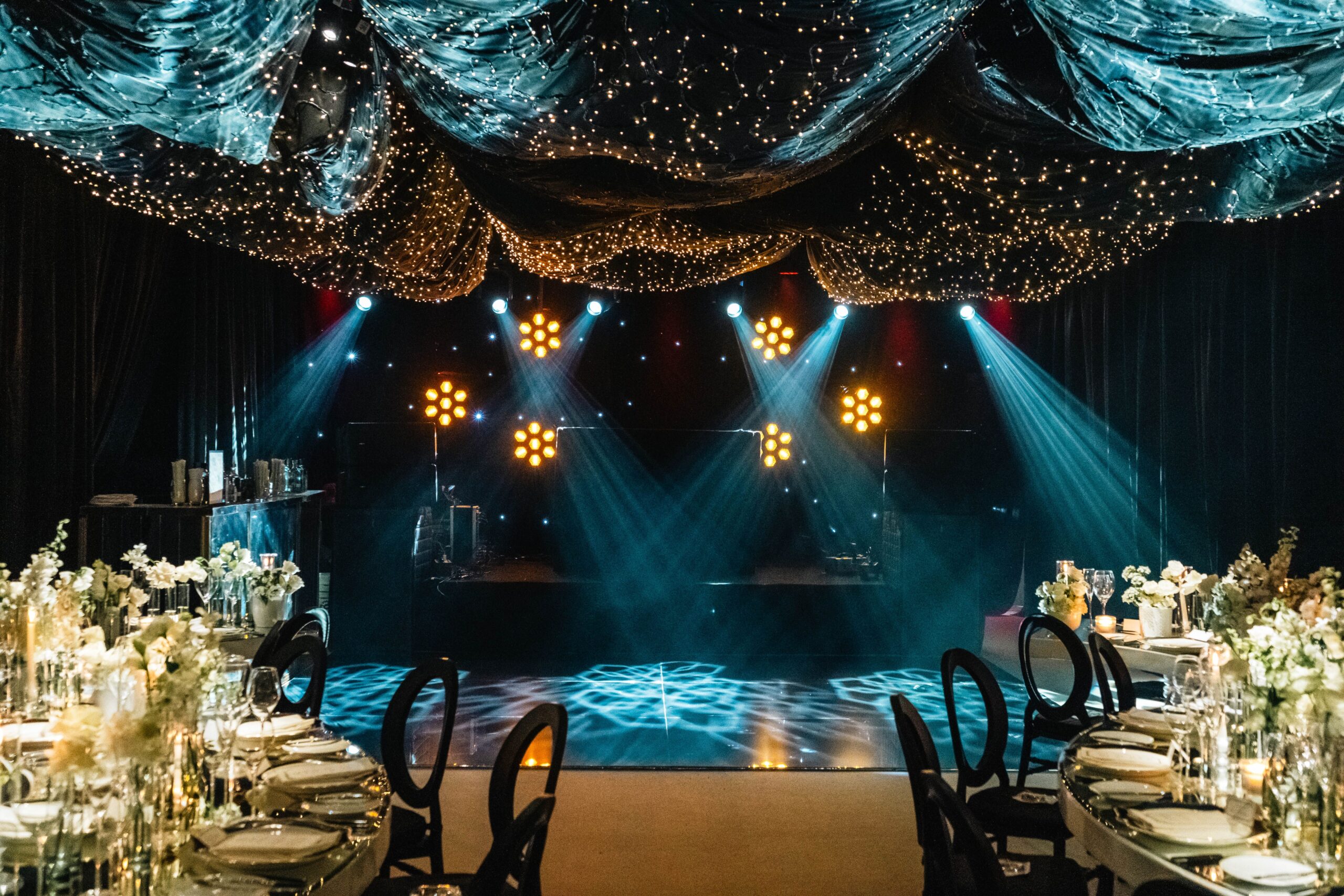
Event production is concerned with how the event works in the room. It turns an agreed concept and agenda into a live experience through technical design, staging, sound, lighting, video, set, branding and show control.
At a leadership conference, production could involve stage design, confidence monitors for speakers, presentation management, live camera relay, branded content, lighting states and professional audio for a hybrid audience. At an awards dinner, it may include entrance music, walk-on stings, award reveal graphics, table lighting, scenic elements and a tightly rehearsed show call.
Production is particularly important when the audience needs to see, hear or feel something clearly. A compelling presentation loses impact if slides are unreadable. A panel discussion becomes frustrating if microphones fail. A product launch needs more than a good venue if the reveal, lighting and content do not create the intended moment.
Production begins before event day
The visible part of production happens onsite, but much of its value is delivered well in advance. A production team will assess the venue, identify technical limitations, create plans, specify equipment, schedule crew and work through the running order in detail.
This is why production should not be treated as a last-minute add-on. If an event needs a substantial stage, rigged lighting, multiple screens or a live-streaming setup, those requirements should shape venue selection from the start. Some beautiful spaces are unsuitable for complex production because of restricted loading, low power capacity, limited rigging points or strict noise limits.
Event production versus event planning: the practical difference
The simplest way to think about event production versus event planning is this: planning determines what the event needs to achieve and coordinates the full programme; production makes the live environment and technical delivery work.
In practice, there is plenty of collaboration. The planner may set the schedule for speaker rehearsals, while the production team manages the technical rehearsal. The planner confirms guest numbers and dietary requirements, while production establishes the room layout that gives everyone a clear view of the stage. Both need to understand the event brief, budget and venue constraints.
For a smaller meeting or private dinner, dedicated production may be minimal. The venue’s in-house AV and a well-managed schedule may be all that is required. For a multi-day conference, awards ceremony, product launch or exhibition, specialist production expertise is usually essential. It depends on the format, scale, audience expectations and how central content is to the event.
When free venue sourcing is enough
If you have an internal team that can manage suppliers, guest communications and event-day logistics, venue finding may be the only external support you need. This is common for straightforward meetings, private dining, team celebrations and corporate Christmas parties where the brief is clear and the venue offers an inclusive package.
A free venue-finding service can still save considerable time. An experienced venue finder can quickly distinguish between spaces that look suitable online and those that will genuinely work for your group. They can explain practical differences between options, check dates, obtain costs and use established relationships to discuss rates or terms. That does not mean the lowest price is always available, but it does mean you can make a more informed comparison.
Every enquiry at The Event Book receives a response from a real person. You speak directly with an experienced event professional who will ask useful questions, understand the detail behind your brief and approach venues on your behalf. With more than 20 years of venue-finding experience, our team knows that a shortlist is only helpful when it is relevant.
When to appoint an event planner and production team
Full event management is often the better choice when the event carries reputational importance, has a demanding agenda or involves several suppliers. It is also valuable when your internal team has limited time, even if the event itself appears straightforward.
For example, an international client event may involve venue sourcing, delegate travel, accommodation, catering, branded collateral, entertainment, security, production and onsite registration. A single experienced point of contact helps keep decisions moving and reduces the risk of details being missed between suppliers.
With full event management, The Event Book can coordinate venue, catering, entertainment, AV, production, branding, guest management and onsite delivery. Where appropriate, that can also mean one contract and one invoice rather than separate arrangements with multiple suppliers. It gives clients clear oversight without requiring them to manage every operational conversation themselves.
Questions to ask before deciding
Before appointing support, be clear about what is already covered by the venue and what is not. Ask whether the quoted AV is suitable for your agenda, whether Wi-Fi can support your delegates, how long suppliers have for set-up and whether the venue can accommodate rehearsals. If you are considering entertainment or a live reveal, establish sound limits, access times and technical requirements early.
It is equally useful to consider your internal capacity. You may have a strong idea of the event you want but no one available to chase venue responses, compare proposals, coordinate suppliers and run the day. In that case, venue sourcing can be the first step, with full event support added if the project becomes more complex.
The best approach is not always the largest one. A well-chosen venue and capable internal organiser can be exactly right for a small event. For a high-profile programme with technical demands, bringing planning and production together early gives you more control, better continuity and fewer surprises on the day. Your event brief is in safe hands when the venue, programme and production requirements are considered as one.
Send us your complete brief and we aim to provide a shortlist of preferred options, availability and indicative costs. Speak to a real person. Call us on 020 7523 5046 or email your event brief to events@theeventbook.uk. We respond within two working hours, Monday to Friday, 9am-6pm.
FAQs
What is the difference between event production and event planning?
Event planning focuses on organising the event, including objectives, budgets, venues, schedules and suppliers. Event production focuses more on delivering the practical and technical elements, such as AV, staging, lighting and set-up.
What does an event production team do?
An event production team can coordinate audiovisual equipment, lighting, staging, technical rehearsals, production schedules and on-site technical delivery, depending on the event brief.
What does an event planner do?
An event planner typically manages the overall plan, including the venue, budget, suppliers, programme, catering, guest arrangements and coordination.
Can event planning and event production be handled by the same company?
Yes. Some companies provide both services, giving clients one team to coordinate the planning and production requirements. The exact scope varies by provider.
Does every corporate event need an event production team?
Not every event needs extensive production support. A meeting may only require basic AV, while a conference, product launch or awards ceremony may need specialist staging, sound, lighting and technical staff.
When should event production be involved in the planning process?
Involve production specialists early when the event includes complex AV, staging, lighting, live presentations or venue restrictions. Early coordination helps identify technical requirements and avoid last-minute problems.