
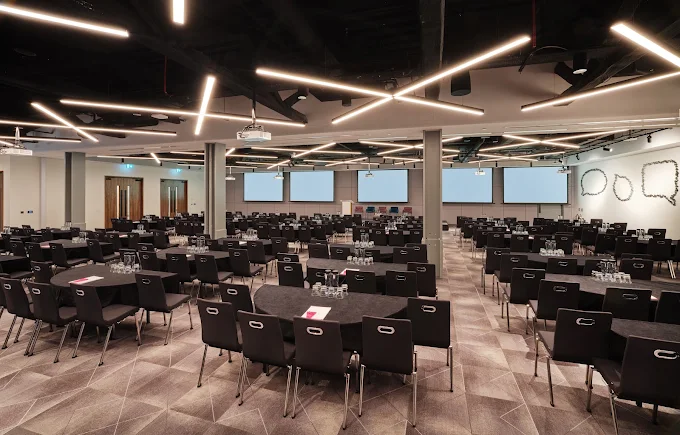
The best London conference venues are not necessarily the biggest, newest or most recognisable. They are the venues that make your agenda easy to deliver: delegates can arrive without friction, the room supports the way people need to participate, and the costs are clear before contracts are signed. For a one-day leadership meeting, that may mean a discreet hotel boardroom in Mayfair. For a 500-person annual conference, it could mean a purpose-built space near a major transport hub, with enough breakout rooms, loading access and production capability.
London offers extraordinary choice, which is helpful until you are comparing dozens of similar-looking options under time pressure. A considered shortlist should save time, not create more decisions.
What makes the best London conference venues?
The right venue begins with the purpose of the event. A conference built around presentations needs a strong plenary room, reliable sightlines and a stage that works for speakers and screens. A strategy day or internal summit may need flexible breakout spaces, informal seating and room for collaboration. An exhibition-led conference requires a different set of priorities again: registration flow, ceiling height, rigging points, vehicle access, power and space for catering away from the stands.
Location matters, but it is rarely as simple as choosing Central London. Consider where delegates are travelling from and how much movement is built into the day. Westminster and Victoria can work well for government-facing meetings and guests arriving via Gatwick. Covent Garden and the South Bank suit centrally based teams and client events. Bank, Liverpool Street and Canary Wharf are often practical for financial and international audiences, particularly where nearby accommodation is needed.
The best choice also depends on the tone you want to set. Hotels offer convenience, bedrooms and established conference operations. Historic buildings and museums can give a leadership summit or awards dinner more occasion, although access, production restrictions and catering arrangements require closer attention. Contemporary venues can offer flexibility and a more informal atmosphere, while dedicated conference centres are often the sensible option for larger delegate numbers, multiple streams and exhibition requirements.
A venue that looks impressive in photographs can still be wrong for the job. Low ceilings, narrow lifts, a single small foyer or restrictive access times can affect registration, branding and AV production. This is why an experienced venue finder will ask practical questions before sending recommendations.
Start with a brief that gives venues something to work with
A complete brief does not need to be lengthy, but it should be specific enough to produce meaningful availability and costs. Start with your preferred date and whether there is flexibility. Share delegate numbers, including speakers, exhibitors and staff, then explain the format: theatre seating, cabaret tables, classroom style, exhibition stands, breakouts, dinner or drinks reception.
Budget is equally useful. If you have a per-person figure, say whether it needs to cover room hire, catering, AV, production and service. If you have a total budget, identify what is included. Venues price conferences in different ways, and a low day-delegate rate may not include the room configuration, evening drinks, technical support or branding that your event needs.
It also helps to flag details that can change the shortlist completely. These might include step-free access, halal or kosher catering, a private speaker green room, overnight bedrooms, secure registration, simultaneous translation, an international audience or a requirement to bring in your own production supplier. The more clearly these are understood at the beginning, the less likely it is that a preferred venue falls away later.
Capacity is only the starting point
A room advertised for 300 theatre-style delegates may be technically large enough, but that does not mean it is comfortable for your conference. Once you allow for a stage, screens, cameras, sound desk, aisles and accessible seating, the realistic capacity can reduce significantly. Cabaret layouts need still more space, particularly if you want clear sightlines to content and room for delegates to move between tables.
Breakouts deserve the same level of scrutiny. A venue with one excellent plenary room and inadequate secondary spaces can lead to a fragmented delegate experience. Check whether breakout rooms are on the same floor, whether they have daylight or natural ventilation if that matters to your team, and whether the venue can turn rooms around between sessions without disrupting the agenda.
For conferences with sponsors or exhibitors, consider the journey from arrival to registration, catering and main room. If the exhibition is tucked away from natural delegate traffic, it may not deliver the value exhibitors expect. A well-planned foyer can support registration, networking and partner visibility, but it can become congested quickly if it also serves as the only route to meeting rooms.
Compare costs with the full event in mind
Venue proposals can be difficult to compare line by line. One may include catering and basic Wi-Fi, while another includes a room only. One venue may require an in-house AV team; another may permit an external supplier but charge for power, rigging or technical access. Neither approach is automatically better. It depends on the programme, budget and level of production required.
Ask for clarity around what is included in the quoted rate, minimum catering spends, service charges, VAT, evening access, security, cloakroom, furniture, staging, screens and technician hours. If an event runs beyond standard hours, establish the cost of late finishes and whether supplier access the day before is possible.
Experienced venue knowledge is valuable here. The Event Book can explain the practical differences between options and use established venue relationships to negotiate rates where appropriate. The aim is not simply to find the lowest headline figure, but to identify a venue that performs well operationally and represents good value for the event you are creating.
Venue finding without the hours of chasing
Contacting venues individually can take far longer than expected, especially for a popular London date. Availability changes quickly, sales teams need time to check diary space, and initial proposals may not answer the questions that matter to your brief. Meanwhile, your internal stakeholders are waiting for options.
The Event Book’s venue-finding service is completely free to clients across London, the UK and internationally. Our senior team brings over 20 years of venue-finding experience and direct relationships with London and international venues. We handle everything from private dining for 25 guests to conferences, exhibitions and large corporate events.
Every enquiry receives a response from a real person. You will speak directly with an experienced event professional who understands the brief, asks useful questions and contacts suitable venues on your behalf. Rather than leaving you with an unfiltered directory of possibilities, we check availability, gather indicative costs and present a focused shortlist of preferred options.
Once we receive a complete brief, we aim to provide that shortlist within two working hours. Timing will always depend on venue responses and the complexity of the enquiry, particularly where there are multiple dates, detailed production requirements or international considerations. Your event brief is in safe hands, and we get to work on it right away.
When to involve a full event management team
Venue sourcing can be used as a standalone service, which is useful if your in-house team is managing the rest of the conference. For more complex programmes, it can be more efficient to appoint one senior-led team to manage the event from venue selection through to onsite delivery.
This can include catering, delegate management, accommodation, AV, production, staging, branding, entertainment and supplier coordination. It also gives clients one experienced point of contact, one contract and one invoice, rather than separate conversations with every supplier. For international teams planning an event in London, that local knowledge can be particularly reassuring when decisions need to be made across time zones.
The strongest conference venue is the one that lets your content, people and objectives take centre stage. Send us your complete brief and we aim to provide a shortlist of preferred options, availability and indicative costs. Speak to a real person. Call us on 020 7523 5046 or email your event brief to events@theeventbook.uk. We respond within 2 hours, Monday to Friday, 9am-6pm.
FAQs
What are the best conference venues in London?
The best venue depends on your delegate numbers, location, budget, event format and technical requirements. Options include dedicated conference centres, hotels, historic buildings and distinctive event spaces.
What should I look for when choosing a London conference venue?
Consider location, transport links, capacity, room layouts, AV facilities, breakout rooms, catering, accessibility and the overall delegate experience.
How much does it cost to hire a conference venue in London?
Costs vary according to the venue, date, guest numbers, room configuration, catering and technical requirements. Request a detailed proposal to compare the full cost.
Which London conference venues are suitable for large events?
Look for venues with suitable auditorium capacity, exhibition or networking space, breakout rooms, loading access and production facilities. Check the capacity for your preferred seating layout rather than relying only on maximum standing capacity.
Are there small conference venues in London for private business meetings?
Yes. Hotels, private meeting spaces, conference centres and distinctive venues offer smaller rooms for presentations, workshops, board meetings and focused business events.
How far in advance should I book a London conference venue?
Start searching as early as possible, especially for larger conferences and popular dates. Early planning gives you more choice and time to confirm speakers, production, catering and delegate arrangements.
