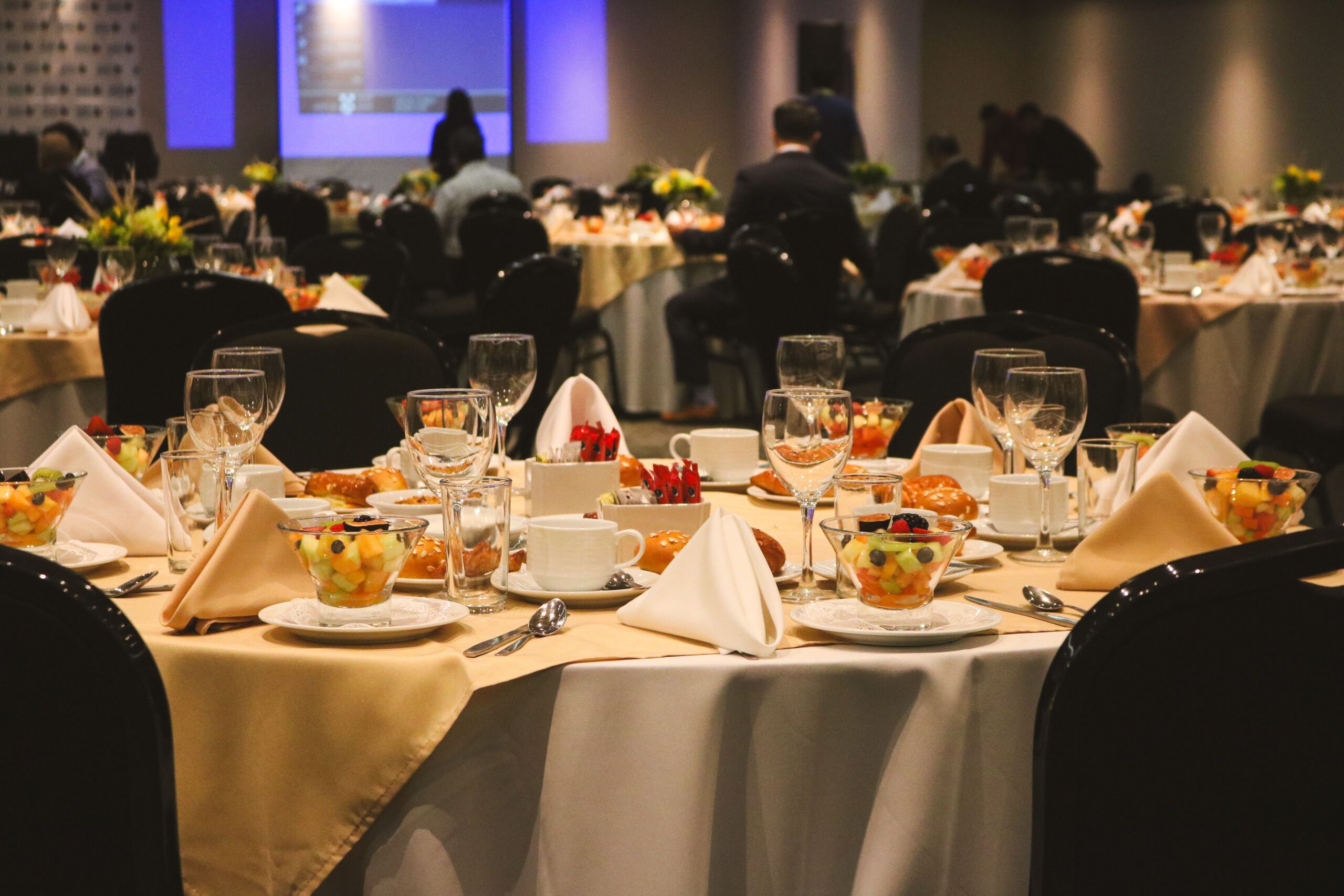
A corporate dinner can have excellent food, a beautiful venue and a well-produced awards moment, yet still feel slightly flat if the wrong people spend three hours at the same table. This corporate dinner seating plan guide is designed to help you make the guest experience feel considered from the first drink through to coffee, speeches and departure.
Seating is not an administrative task to leave until the final week. It is one of the most effective ways to encourage useful introductions, reward key people, support senior stakeholders and manage the practical realities of a large guest list. For gala dinners, client entertaining and company celebrations alike, a thoughtful plan quietly shapes the whole evening.
Start with the purpose of the dinner
Before assigning anyone a table number, be clear about what the dinner needs to achieve. A leadership dinner may need to create time between executives and high-potential colleagues. A client event might prioritise account relationships and commercially useful conversations. An office Christmas party has a different brief again: people generally want to relax with colleagues they know, while still meeting others outside their immediate team.
This is where a one-size-fits-all approach can disappoint. Mixing every department completely may sound inclusive, but it can make a celebratory evening feel like enforced networking. Keeping intact teams together can be equally limiting if the objective is to build connections after a merger, reorganisation or major project.
A useful starting point is to divide the guest list into broad groups: senior hosts, clients or partners, department leads, new starters, long-serving employees, award nominees and guests requiring particular consideration. You are not creating a hierarchy for its own sake. You are identifying the relationships that will make the room work.
Build the room plan before the seating plan
The best seating decisions are made with the room layout in view. Ask the venue for a scaled floorplan showing table positions, stage, screens, entrances, bar, cloakroom access and service routes. A table that appears perfectly placed on a simple diagram may be beside a swinging kitchen door, directly under a loud speaker or exposed to constant footfall from the toilets.
For formal dinners, the top table or host table should have a clear relationship with the stage and sightlines to screens. At round tables, guests should be able to see the speaker without twisting in their chairs. At long banquet tables, think carefully about where speeches will be delivered and how sound will travel across the room.
Table shape matters too. Rounds of eight to ten are usually effective for corporate dinners because everyone can speak across the table and service is relatively straightforward. Tables of 12 can work in a large ballroom, but conversation naturally splits into smaller groups. Long tables create theatre and a more communal feel, particularly for a gala dinner, but they require more attention to who sits beside whom rather than simply who shares a table.
Do not overlook accessibility. Guests with mobility requirements should have a clear, unobstructed route and enough space to sit comfortably. Those who may need to leave early are often better placed near an exit, while still being part of the occasion rather than positioned as an afterthought.
The room’s hierarchy is felt, not announced
Most guests understand that the tables closest to a stage, dancefloor or principal host can feel more prominent. That is not necessarily a problem, but it should be intentional. Avoid making one area feel visibly secondary, particularly at an awards dinner where finalists, sponsors or valued clients may be seated.
If the room has challenging positions, use them thoughtfully. Place lively internal groups near the dancefloor, for example, rather than senior clients who may prefer easier conversation. A strong event layout balances status, comfort and energy rather than treating proximity to the stage as the only measure of importance.
Use a corporate dinner seating plan that feels natural
The strongest corporate dinner seating plans balance familiar faces with fresh conversation. As a guide, give most guests at least two or three people they already know, then introduce a small number of purposeful connections. This can be a colleague from another office, a client contact with a shared interest, or someone who worked on the same project.
Avoid placing every senior person at one table. It can create a closed leadership group and leave the rest of the room without a host. Spreading confident, welcoming people across the tables helps conversations get started and makes guests feel looked after. The same principle applies to clients: if several people attend from one organisation, they may appreciate sitting with one colleague, but not necessarily all of them.
For a host table, aim for a mix of people who can carry conversation naturally. The chief executive does not always need the central seat if another senior host is better placed to welcome a particular client group. Consider personality as well as job title. A warm, informed host can do more for the table than a senior figure who has little connection to the guests around them.
Where spouses or partners are attending, decide early whether they will sit together. For an employee celebration, the answer is usually yes. At a client dinner or formal fundraising evening, there may be a case for splitting couples to create wider conversation, but only where guests are comfortable with the format and it is communicated appropriately.
Position guests carefully, not clinically
Once table groups are broadly agreed, think about individual seats. This becomes particularly valuable at smaller dinners, top tables and long-table formats. Place quieter guests beside natural conversationalists, but do not make anyone responsible for entertaining the entire table. Keep known tensions apart, and avoid seating direct competitors together if there is a risk that the conversation will become awkward.
Cultural considerations also deserve care. International guest groups may have different expectations around seniority, language and business etiquette. If English is not every guest’s first language, seating them near a supportive host or colleagues they know can make a real difference. Dietary requirements should be managed discreetly with the catering team, not signalled through an obvious place card system.
Name cards should be easy to read and consistent with the tone of the evening. For large corporate dinners, table names can be more memorable than numbers, provided they are simple and clearly signposted. If guests are arriving from a drinks reception, a printed or digital table plan at the entrance prevents the bottleneck that occurs when everyone searches for their name at once.
Manage changes without losing control
Guest lists change, particularly for busy corporate audiences. The practical answer is to set a seating-plan deadline that is earlier than the venue’s final numbers deadline. This gives you time to absorb cancellations, late confirmations and dietary updates without rebuilding the plan at the last minute.
Keep one master version of the seating plan, with clear ownership. If several colleagues are editing separate spreadsheets, errors quickly appear in table numbers, spellings and dietary notes. Your venue, caterer, registration team and production team do not all need the same document, but they do need accurate information relevant to their role.
It is also wise to hold one or two flexible seats on larger tables where capacity allows. This will not solve every late addition, but it can protect the balance of the room. For a gala dinner of 150 guests or more, the seating plan should be checked alongside the final floorplan, table sizes, menu service and timings during the final event briefing.
Common mistakes to avoid
The most common error is treating every table as interchangeable. It rarely is. Sightlines, access, host presence and group dynamics all vary. Another is waiting for every RSVP before starting. Begin with the confirmed core, then build in sensible flexibility.
It is also easy to over-engineer the room. Guests do not need to feel that every conversation has been curated. The aim is to remove avoidable awkwardness and give people a good chance of enjoying themselves, not to turn dinner into a networking exercise.
For larger or more complex events, an experienced event team can take the pressure out of the final detail – coordinating the room plan, venue, catering team, place cards and last-minute changes from one central point of contact.
If you are planning a corporate gala dinner, client event or office Christmas party, The Event Book can help shape a seating plan that supports the atmosphere you want to create. Send us your enquiry, call us on 020 7523 5046 or email your event brief to events@theeventbook.uk. A well-considered table plan is one of those unseen details guests may never mention, but they will remember how comfortable the evening felt.
FAQs
How do you create a corporate dinner seating plan
Start with the purpose of the dinner, then consider the room layout, guest relationships, table shape, accessibility, host positions and any practical requirements before assigning individual seats.
How many people should sit at a corporate dinner table?
The article suggests that round tables of eight to ten are usually effective for corporate dinners because they encourage conversation and allow relatively straightforward service. Tables of 12 can work, but conversation may naturally split into smaller groups.
How should I seat guests at a corporate dinner?
A useful approach is to give most guests two or three familiar people while introducing a smaller number of purposeful connections. Spreading confident hosts across the room can also help conversations get started.
How do I plan seating for a gala dinner?
Consider the stage, screens, entrances, bar, service routes and table layout before assigning seats. Guests should have good sightlines, comfortable access and a clear relationship between their table and the key parts of the room.
How should accessibility be considered in a corporate seating plan?
Guests with mobility requirements should have an unobstructed route and sufficient space to sit comfortably. Other practical considerations may include accessible routes, proximity to exits and discreet handling of dietary or individual requirements.
When should I finalise a corporate dinner seating plan?
The article recommends setting a seating-plan deadline earlier than the venue’s final-number deadline, allowing time to manage cancellations, late confirmations and dietary updates.